
Prime of Prime Liquidity Explained: A No-Nonsense Guide for Brokers
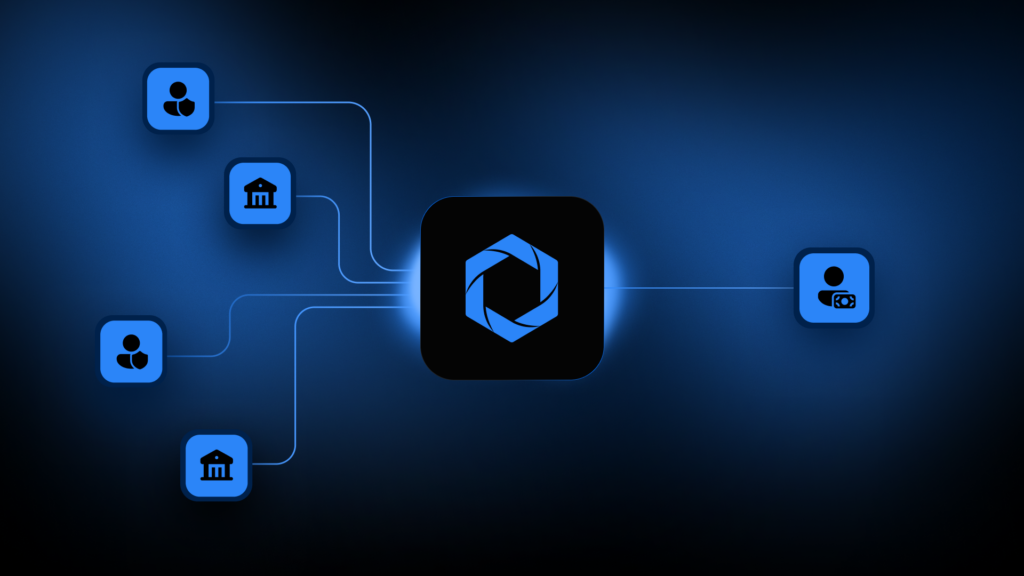
This guide explains what Prime of Prime liquidity actually is, how the execution chain works from a Tier 1 bank to your client’s terminal, and what to look for when the sales pitch ends and due diligence begins.
The Liquidity Chain: From Interbank to Retail
Global FX liquidity originates from a small number of very large institutions. Major banks – JPMorgan, Citi, Barclays, UBS, Deutsche Bank, and a handful of others – generate the deepest pools of tradable prices in the world. They quote to each other and to large institutional clients on electronic platforms such as EBS, Reuters Matching, and proprietary single-dealer platforms.
This is Tier 1 liquidity. It’s real, it’s deep, and it’s almost entirely inaccessible to mid-sized forex brokers.
Why? Three barriers stand in the way.
First, capital requirements. A direct prime brokerage relationship with a Tier 1 bank typically requires minimum capital deposits of $10 million or more. After the 2015 Swiss franc crisis, those thresholds went even higher. Second, credit assessment. Banks evaluate counterparty risk meticulously. A mid-sized broker with $2–10 million in operating capital does not meet the credit profile that JPMorgan or UBS requires. Third, operational infrastructure. Maintaining direct FIX sessions with multiple Tier 1 banks, managing margin calls across counterparties, and handling multi-venue settlement is operationally intensive.
This is the problem that Prime of Prime providers exist to solve.
What a Prime of Prime Actually Does
A Prime of Prime (PoP) is a regulated financial institution that holds one or more prime brokerage accounts with Tier 1 banks, and then redistributes that liquidity to mid-sized brokers who cannot access Tier 1 directly.
The PoP performs several critical functions simultaneously.
Credit Intermediation
This is the foundational service. The PoP’s own capital and credit relationship with the Tier 1 bank allows it to face that bank as a principal counterparty. The PoP then extends a separate credit facility to the broker. The broker deposits margin with the PoP – not with the bank. The PoP aggregates this credit exposure across all its broker clients and manages it against the margin it holds at the Tier 1 level.
In practical terms: a broker might deposit $200,000–$500,000 with a PoP to access the same Tier 1 pricing that would require $10 million+ in a direct relationship. The PoP absorbs the credit gap.
Price Aggregation
A PoP does not simply pass through one bank’s price feed. It connects to multiple Tier 1 banks and non-bank liquidity sources, then runs an aggregation engine that constructs a composite order book. For every instrument, the engine selects the best available bid and ask across all connected sources, creating a synthetic top-of-book price that is typically tighter than that of any single provider.
This is where the technology becomes critical. The aggregation engine must normalize prices from different sources (each with different quoting conventions, update frequencies, and latency profiles), handle partial fills, manage the order book depth beyond top-of-book, and do all of this in sub-millisecond time.
Execution and Order Routing
When a broker’s client clicks “Buy” on EUR/USD, that order travels from the trading platform (typically MT4, MT5, Match-Trader, or a proprietary system) through a liquidity bridge, into the PoP’s aggregation engine. The engine’s smart order router determines the optimal execution path based on multiple parameters: price, available depth at that price, historical fill rate of each liquidity source, latency, and the broker’s configured routing rules.
The order is then routed to the selected liquidity provider, executed, and confirmed back through the chain. The entire process – from client click to fill confirmation – happens in milliseconds.
This smart routing logic is not cosmetic. During normal market conditions, the difference between a well-optimized and a poorly optimized router may be fractions of a pip. During high-volatility events – NFP releases, central bank announcements, geopolitical shocks – that difference can mean the gap between a filled order and a rejection, between a 0.8 pip spread and a 15 pip spike.
Risk Management
A well-engineered PoP does not simply pass all flow upstream indiscriminately. It manages its own book, monitors exposure across all broker clients in real time, and applies risk controls at the session level. This includes detecting and classifying toxic flow – order patterns from traders who consistently exploit latency gaps, arbitrage pricing discrepancies, or trade on information advantages that create systematic losses for the liquidity provider.
Toxic flow management protects both the PoP and the broker. If toxic flow from one broker’s clients is passed unfiltered to Tier 1 banks, those banks will widen spreads, increase reject rates, or ultimately terminate the relationship. The PoP’s risk management layer acts as a buffer that preserves the quality of the upstream relationship.
The Technology Stack: What Sits Between You and the Market
Understanding the physical infrastructure helps explain why execution quality varies so dramatically between liquidity providers.
The FIX Protocol
The Financial Information eXchange (FIX) protocol is the standard communication language between the broker’s systems and the PoP’s systems. FIX sessions are persistent TCP/IP connections that carry market data (streaming prices, order book depth) and trading messages (new orders, fills, cancellations) in a standardized format.
FIX is not a plug-and-play technology. Each liquidity provider has implementation nuances – different message fields, different handling of partial fills, different sequence number management. Maintaining stable FIX sessions with heartbeat monitoring, automatic reconnection, and sequence number recovery across multiple providers requires dedicated infrastructure.
The Liquidity Bridge
The bridge is middleware that connects the broker’s trading platform to the PoP. It handles protocol translation (the trading platform speaks its own language; the PoP speaks FIX), applies markup and commission rules, manages A-book/B-book routing logic, and provides operational monitoring.
In a typical setup, an MT5 broker connects through a bridge (such as those provided by Match-Trade Technologies, PrimeXM, oneZero, or Centroid) to the PoP’s aggregation engine via FIX. The bridge manages symbol mapping between the platform’s naming conventions and the LP’s, applies the broker’s spread markup, and routes orders according to the broker’s execution model.
The Aggregation Engine
This is the computational core. It receives streaming price feeds from all connected liquidity sources, normalizes them (adjusting for timestamp differences, decimal conventions, and lot-size variations), and constructs the composite order book that the broker’s clients trade against.
A sophisticated aggregation engine does more than select the best bid and ask. It maintains multiple levels of market depth (10 levels is standard for institutional-grade providers), weights sources based on historical execution quality, and applies anti-latency-arbitrage filters to detect when an incoming price is already stale relative to faster-moving venues.
Data Centers and Connectivity
Physical proximity matters. The aggregation engine and its connections to Tier 1 banks typically live in major financial data centers – Equinix LD4 in London, NY4/NY5 in New York, TY3 in Tokyo. Cross-connect fiber links between servers in the same facility reduce latency to microseconds. When the bridge, the aggregation engine, and the LP connections are co-located, the entire execution chain from order receipt to fill runs in single-digit milliseconds.
A-Book, B-Book, and Hybrid: How Brokers Use PoP Liquidity
A common point of confusion: engaging a PoP does not automatically mean every trade hits the external market. Brokers use PoP liquidity in three distinct execution models.
A-Book (STP / Full Pass-Through)
Every client order is immediately offset with a matching trade at the PoP. The broker earns revenue from the spread markup or commission, and takes no market risk. This model is straightforward, transparent, and popular with brokers who want to eliminate dealing-desk conflicts of interest. The trade-off: revenue per trade is lower, and the broker is entirely dependent on the PoP’s execution quality.
B-Book (Market Making / Internalization)
The broker acts as counterparty to its clients’ trades, using the PoP’s price feed for reference pricing but not necessarily hedging every position. Revenue potential is higher because the broker captures the full spread plus any client losses. But the broker also assumes market risk, and poorly managed B-book operations can lead to significant losses during volatile events.
Hybrid
Most regulated brokers today operate a hybrid model. Smaller trades and retail flow are internalized (B-book), while larger trades, profitable clients, or positions that exceed internal risk thresholds are routed externally to the PoP (A-book). The routing logic is managed in the bridge, often based on parameters like trade size, instrument, client trading profile, and real-time exposure.
In every model, the PoP’s role remains the same: provide reliable pricing, maintain deep order books, and execute hedging flow with minimal slippage and rejection.
Why Stress Events Are the Real Test
Calm-market execution quality is effectively commoditized. During the London session on a quiet Tuesday, most PoPs will show similar spreads on EUR/USD and similar fill times. The differentiation appears under stress.
Consider what happens during a major market event – an unexpected central bank decision, a geopolitical shock, or a flash crash in gold or oil. Liquidity providers upstream begin withdrawing depth: Tier 1 banks widen their quotes or temporarily stop quoting. The number of executable price levels in the order book drops. Latency increases as message traffic spikes.
This is when a PoP’s aggregation engine, its number of diverse liquidity sources, and its risk management infrastructure earn their keep. A PoP connected to a single bank has a single point of failure. A PoP connected to multiple Tier 1 banks and non-bank market makers through a robust aggregation engine can maintain tighter spreads and deeper order books because it can dynamically source the best available pricing from whichever providers are still active.
The order book depth – not just top-of-book – determines whether your clients’ larger orders fill cleanly or get partially filled at progressively worse prices. During stress, a provider maintaining 10 levels of market depth from multiple sources will fill a $5 million order very differently from one displaying a single-level top-of-book.
Ask for the data. Not a marketing claim. Actual spread, tick volume, and fill ratio data from a named event – the January 2026 gold crash, a CME outage, or an NFP release. If a PoP cannot produce stress-event performance data, treat the omission as a data point.
Toxic Flow: The Risk Your PoP Manages (or Doesn’t)
Toxic flow is not a moral judgment. It’s a technical classification. A trade is considered toxic when the counterparty – the liquidity provider – experiences consistent adverse price movement immediately after filling the order. In practical terms: a pattern of fills that generate systematic short-term losses for the LP.
Common sources of toxic flow include latency arbitrage (traders exploiting the speed gap between a broker’s price feed and the actual market price), news-driven strategies that trade ahead of price adjustments, and cross-venue arbitrage exploiting momentary price discrepancies between the broker’s CFD price and the underlying futures or spot market.
Why should a broker care about flow toxicity? Because the consequences flow uphill. If a significant portion of the broker’s hedging flow is toxic, the PoP’s upstream banks will detect it through their own analytics (markout analysis, decay curves, short-term P&L attribution). The response is predictable: wider spreads quoted to the PoP, higher reject rates, and eventually a deterioration in the PoP’s access to Tier 1 pricing. That deterioration is then passed on to the broker.
A sophisticated PoP detects and classifies flow toxicity at the session level, often in real time. It can apply differentiated routing rules – sending benign flow through one channel and flagged flow through another – protecting the overall quality of the upstream relationship. A PoP without this capability exposes every broker on its platform to the toxic flow of any single broker.
The Economics: How PoP Pricing Works
PoP providers generally operate on one of two commercial models, and brokers should understand both.
Raw Spread + Commission
The broker receives the aggregated price feed with no markup from the PoP. Revenue for the PoP comes from a per-lot commission, typically ranging from $2 to $5 per standard lot (100,000 units) round-turn. This model is transparent: the broker sees exactly what the market is quoting and controls its own client-facing markup independently.
Markup Model
The PoP adds its own spread markup before delivering the price feed to the broker. The broker then adds another layer of markup for its retail clients. This model is simpler operationally, but the broker has less visibility into the true underlying spread and pays an embedded cost that’s harder to benchmark.
Beyond the spread/commission, brokers typically face a minimum monthly fee or volume commitment, swap rates (the overnight financing cost on open positions), and margin requirements that determine how much capital must be deposited to support a given trading volume.
The cheapest headline spread is rarely the best deal. A provider offering 0.0 pip raw spread but rejecting 15% of orders during volatility delivers worse effective pricing than one showing 0.2 pip spread with a 99.5% fill rate. Effective cost is a function of spread, commission, slippage, and fill rate combined.
What to Evaluate Before Signing
The process of choosing a PoP is one of the most consequential infrastructure decisions a broker makes. Here’s what to look at beyond the sales pitch.
Regulatory status. A PoP operates under capital adequacy requirements, client money segregation rules, and ongoing supervisory reporting. Offshore-licensed or unlicensed providers offer no structural protection if something goes wrong.
Instrument coverage. How many instruments does the PoP support, and across how many asset classes? FX-only is limiting. A multi-asset PoP offering forex, indices, commodities, crypto CFDs, and equities through a single margin account simplifies the broker’s operational stack.
Order book depth. Ask specifically: how many levels of market depth does the price feed include? Top-of-book only is insufficient for any broker serving clients who trade in size. Ten levels of depth from multiple aggregated sources is the institutional standard.
Technology integration. Does the PoP integrate cleanly with your trading platform via FIX API? Is there a bridge solution included or recommended? How quickly can new instruments or routing rules be configured?
Service and responsiveness. During a market event, can you reach a human at the PoP within minutes? Do they have a dealing desk monitoring the feed in real time? Automated systems are necessary but not sufficient. The broker needs a partner who is awake and responsive during stress.
Stress-event track record. The single most telling question: show me how your execution performed during [specific named event]. If the answer is evasion, the PoP either doesn’t track it or doesn’t want to share it. Neither is acceptable.
Conclusion: Liquidity Is Infrastructure, Not a Feature
Prime of Prime liquidity is not a product you purchase. It’s infrastructure you rely on. Every trade your clients execute, every spread they see, every fill they receive – it all flows through the PoP’s systems. The right PoP partner is invisible: execution is clean, spreads are stable, fills are fast, and the only time you think about your liquidity provider is when you check the monthly report and the numbers are where they should be.
The wrong PoP makes itself visible at the worst possible moment – during a volatility spike, during a client’s large trade, during a stress event when depth evaporates and fills stop.
The broker who understands the mechanism beneath the marketing – who knows what credit intermediation means, how aggregation engines construct prices, why toxic flow management matters, and what 10-level market depth actually delivers – is the broker who makes a better infrastructure decision.
And in a market where core technical capabilities are converging, the infrastructure decision is the competitive decision.