
When to Switch Liquidity Providers: A Growth-Stage Broker’s Guide
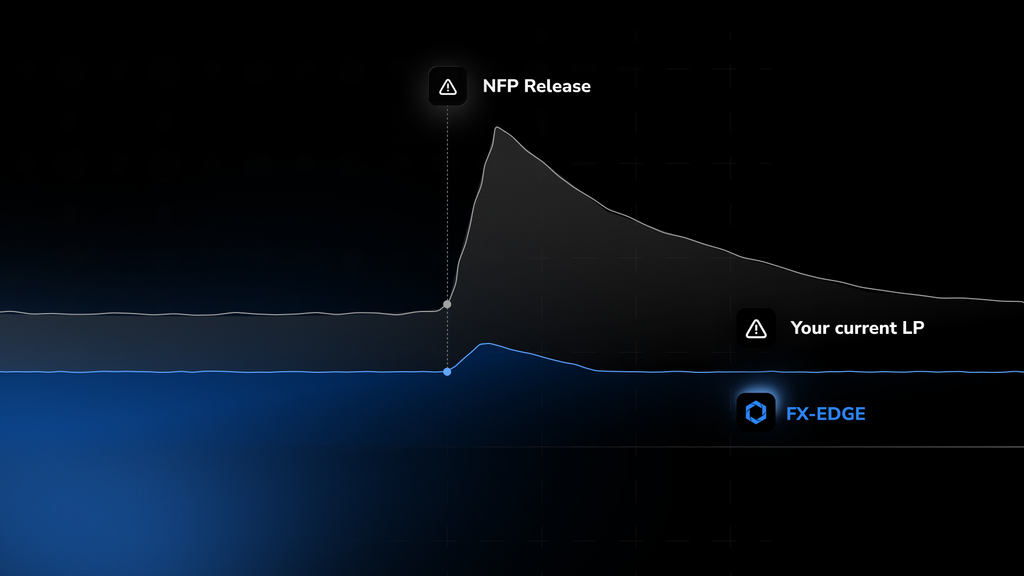
A broker should switch liquidity providers when execution data – not sales promises – shows sustained degradation: spreads that blow out during news events while competitors’ hold, rejection rates above 1–2% in normal conditions, latency that creeps up year over year, blocked instrument expansion, or support that answers in hours instead of minutes. This guide covers how to spot those signals, what staying really costs, how to stress-test a replacement, and how to migrate without disrupting live client flow.
Plenty is written about choosing your first LP. Almost nothing about when to leave – because switching means admitting the current setup isn’t working, plus migration risk and awkward conversations with a long-time partner. So most brokers delay, absorbing costs that never appear on any single dashboard.
This guide is for regulated brokers in the 20–150 employee range who have outgrown their initial liquidity setup: more volume, more demanding clients, and friction that didn’t exist at lower scale.
The best time to evaluate your LP is not when something breaks. It’s when nothing improves during the events where it should.
What Are the Signs You Should Change Your Liquidity Provider?
Five patterns, all visible in your own execution logs:
1. Spread instability during stress events. Every LP shows tight spreads in a calm London session. The differentiator is NFP, central bank decisions, and flash events. The January 30, 2026 metals crash – gold down roughly 11–12%, silver around 30%, the worst single-day drop since 1980, with World Gold Council data showing January volumes 72% above the 2025 average – is exactly the kind of session that separates deep, diversified pools from stitched-together thin feeds. The test: pull logs from your last three major volatility events and compare average spread, max spread, and duration of widening against peer brokers. A consistent gap is structural, and it compounds as your volume grows.
2. Rising rejection rates. Every rejected order is a failed client trade, a support ticket, and a seed of distrust. As a working threshold, rejections above 1–2% in normal conditions or ~5% in volatile sessions point to reactive risk management. Track by instrument, session, and size – clustering reveals causes. And compare against the stated fill rate: if the sales deck says 99.5% and your logs show 96.8%, that gap is your real cost of doing business.
3. Latency creep. Connections that filled in single-digit milliseconds in year one drift into double digits by year three as infrastructure ages. For context: leading retail brokers quote ~30–35ms end-to-end, while top-tier LP infrastructure runs at single-digit milliseconds server-side – FX-EDGE quotes sub-3ms execution. The test: chart median and 95th-percentile fill times quarterly. If both trend up while the LP’s marketing numbers stay flat, the marketing describes someone else’s connection.
4. Instrument coverage gaps. Growth brokers expand – crypto CFDs, single stocks, exotics. When your LP blocks that roadmap, you’ve hit a strategic ceiling. The question isn’t how many symbols are on the sales sheet; it’s executable depth in what your clients actually trade. 430+ instruments with genuine depth and pools customized to your flow – FX-EDGE’s approach – beats 2,000 listed symbols with thin books outside major FX. Count is a marketing metric; depth is an execution metric.
5. Declining support responsiveness. When a pricing anomaly hits at 2 AM during an Asian session event, a 10-minute response is a contained incident; a 4-hour response is a client-facing crisis. If your dealing desk can’t reach a human at the LP within minutes during a market event, no SLA document bridges that gap.
What Does It Cost to Stay With an Underperforming LP?
Four compounding costs that never appear on the LP’s invoice:
- Unattributable client attrition. Exit surveys say “better conditions elsewhere,” never “your LP degraded.” The root cause is the same – wider spreads, partial fills, recognizable slippage – spread across hundreds of quiet departures that accelerate as word travels through trader communities.
- Markup compression. Receiving 0.2-pip raw EURUSD lets you mark up to 0.8 and stay competitive. Receiving 0.5-pip raw means the same 0.8 markup earns less than half the margin on identical trades – multiplied across thousands of daily transactions.
- Operational overhead. Dealers babysitting spreads, risk managers building workarounds, support fielding complaints that shouldn’t exist. It shows up in payroll and burnout, not on any invoice.
- Regulatory exposure. Best-execution obligations apply to regulated brokers across jurisdictions. If an audit finds systematic underperformance versus available alternatives, “we’ve always used this LP” is not a defense.
How Do You Evaluate a Replacement Liquidity Provider?
Under realistic conditions, not sales conditions.
| Metric | What to measure | Red flag |
|---|---|---|
| Spread stability | Avg/max spread on XAUUSD, EURUSD, USDJPY during last 3 NFP/CPI releases | No event-specific data available |
| Fill rate | % filled at quoted price, by volatility regime | One aggregate number, no breakdown |
| Rejection rate | By instrument, session, size bucket | “Near-zero” claims, no data |
| Slippage | Positive vs. negative distribution; asymmetry | Only average slippage reported |
| Market depth | 5- and 10-level depth during volatile sessions | Depth quoted only for calm markets |
| Toxic flow handling | The named classification/routing mechanism | Generic “risk management” claims |
| Failover | Backup routing when a venue goes offline | No documented procedure |
Stress-test protocol: trade a demo actively through at least two scheduled high-volatility events (NFP, FOMC, ECB). Watch execution speed under load, spread behavior at the release, rejections on larger sizes, and depth recovery time. A provider that objects to stress-testing tells you everything about their confidence in live performance. Depth retention during stress – not calm-market depth – is the single most important execution metric, and intelligent aggregation (routing that shifts to deeper venues under stress) is what preserves it. Basic best-bid/offer aggregation works in calm markets and fails precisely when it matters.
The toxic flow question: as you scale, some flow will be classified as toxic. The advanced approach is session-level detection – classifying and routing on real-time behavior, not permanent client labels. Demand a named system: FX-EDGE runs this through HawkEye RMS, its real-time risk intelligence engine. An LP that can’t name and explain its mechanism either doesn’t have one or treats all your flow the same. Both hurt at scale.
Regulation and transparency: a licensed LP operating under formal oversight and reporting requirements is a different counterparty from a fully unregulated one quoting the same spread. Just as important: does the LP’s regulatory footprint match yours? FX-EDGE holds licenses in Seychelles, Vanuatu, and South Africa – the jurisdictions where a large share of growth-stage brokers are themselves licensed – which simplifies counterparty due diligence and keeps documentation aligned with how you actually operate. Whatever the license, the practical test is the same: will the provider share audited, event-specific execution data you can put in front of your regulator?
How Do You Migrate Without Disrupting Clients?
Three phases. Never a one-day cutover.
- Parallel running (2–4 weeks). Connect the new LP alongside the old – digital-first providers like FX-EDGE onboard in ~5 days, so this can start within your first sprint. Route 10–20% of flow and compare fill rates, spreads during overlapping volatile events, latency, and rejections in live production. Scale the percentage as the data confirms.
- Instrument migration (1–2 weeks). Move instruments in priority order, starting where the current LP performs worst: metals and commodities first, then indices, majors, minors, crypto. 48-hour observation window per batch.
- Cutover with failover (ongoing). Keep the old connection live as backup for at least 30 days, then run a monthly review on the same metrics that triggered the switch – so the degradation cycle doesn’t quietly restart.
The Decision Framework
Switching LPs is not a sign of failure – it’s a sign of growth. The provider that served you at launch volume may not serve you at ten times that, because your requirements changed.
- Audit execution data from your last three volatility events.
- Quantify the costs of staying: attrition, markup compression, overhead, regulatory risk.
- Stress-test alternatives live and demand event-specific data.
- Migrate in stages with a 30-day failover.
- Monitor monthly so the cycle doesn’t repeat.
The best execution is the execution nobody notices. When clients stop thinking about fills and slippage, the LP relationship is working.
Ready to benchmark your current setup? FX-EDGE offers institutional-grade liquidity without institutional friction: 430+ instruments with real executable depth, sub-3ms execution, HawkEye RMS toxic-flow protection, and onboarding in days, not weeks. Run the stress-test protocol from this guide against a live FX-EDGE demo and compare the numbers side by side.
FAQ
How often should a broker review its liquidity provider?
Quarterly, plus an ad-hoc review after every major volatility event. Compare spread stability, fill rates, rejections, and slippage asymmetry against the benchmarks agreed at onboarding. Annual reviews are too slow to catch latency creep before clients do.
What is a good fill rate for a liquidity provider?
Top-tier LPs sustain above 99% in normal conditions – but demand the breakdown by session, instrument, and volatility regime. A single aggregate figure is a red flag.
How long does it take to switch liquidity providers?
4–8 weeks end-to-end: 2–4 weeks of parallel running with 10–20% of flow, 1–2 weeks of staged instrument migration, then cutover with 30 days of failover.
How long does onboarding with a new LP take?
Traditional providers often need several weeks of document cycles. Digital-first providers have compressed this – FX-EDGE onboards brokers in around 5 days – and onboarding speed is a useful proxy for how the provider operates day to day.
Can a broker use two liquidity providers at once?
Yes – during migration you must, and many brokers permanently keep a secondary LP for failover and pricing benchmarks.
What is toxic flow?
Order flow that systematically profits from an LP’s pricing latency or stale quotes (e.g., latency arbitrage). LPs without granular, session-level classification either degrade all your flow or reject aggressively – and your legitimate clients feel both.